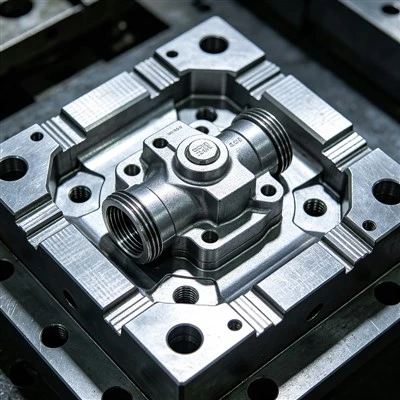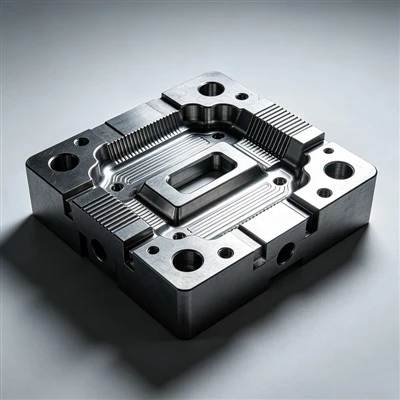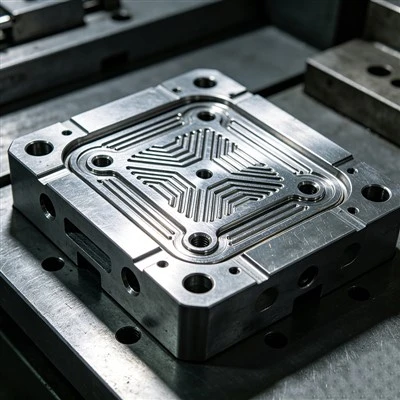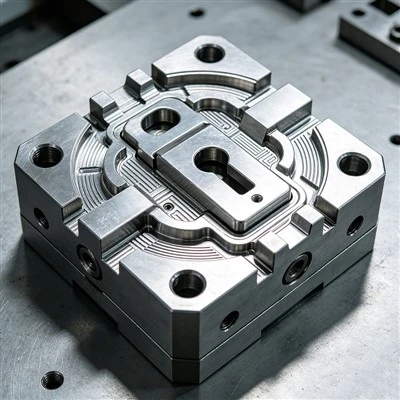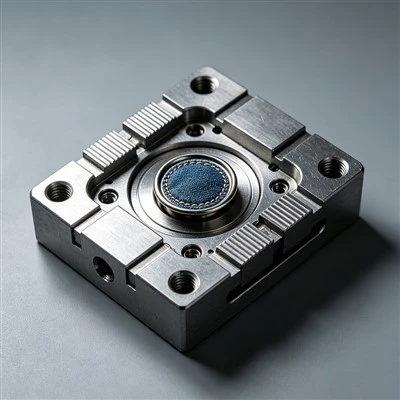
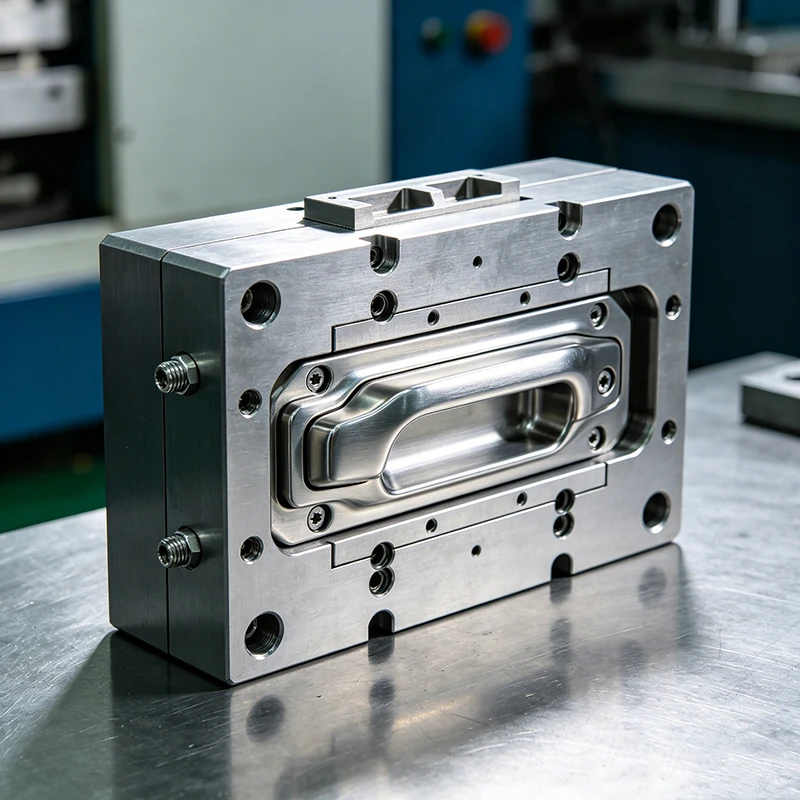

Our Furniture Handle Die Casting Mold is a customized zinc alloy high-pressure die casting mold designed for manufacturing cabinet handles, drawer pulls, wardrobe handles, and other furniture hardware. Built with H13 hot work die steel, precision-machined cavities, and customized cooling and ejection structures, it supports consistent handle forming and efficient batch production.


Technical Specifications
| Parameter | Specification |
|---|---|
| Product Name | Furniture Handle Die Casting Mold |
| Mold Type | High-Pressure Die Casting Mold |
| Applicable Material | Zinc Alloy |
| Mold Steel | H13 Hot Work Die Steel |
| Heat Treatment | Vacuum Quenching & Tempering |
| Machining Process | CNC Machining |
| Cavity Surface | Mirror Polishing |
| Cooling Structure | Cooling Runner |
| Ejection System | Automatic Demoulding |
H13 Mold Steel & Heat Treatment
H13 Hot Work Die Steel: We use H13 steel for mold cores and cavities to withstand repeated thermal cycling and mechanical stress during zinc alloy die casting.
Vacuum Quenching & Tempering: Vacuum heat treatment improves steel hardness and toughness, helping the mold maintain dimensional stability and resist thermal fatigue during production.
Wear-Resistant Treatment: Selected mold working surfaces receive additional wear-resistant treatment to reduce abrasion caused by repeated casting and mold operation.
Cavity Machining
CNC Profile Machining: We use CNC machining to produce handle contours, recessed sections, mounting bosses, and decorative details according to approved product drawings and 3D models.
EDM for Complex Details: Electrical discharge machining is used where narrow grooves, deep cavities, or intricate profiles cannot be efficiently produced by conventional cutting.
Mirror Polishing: We polish designated cavity surfaces to reproduce smooth or decorative handle finishes and reduce surface imperfections transferred during casting.
Cooling & Ejection System
Cooling Runner Layout: We arrange cooling runners according to the handle geometry and mold structure to manage heat distribution and support consistent casting conditions.
Ejection Mechanism: Ejector pins and related mechanisms are positioned according to the handle structure to release castings while minimizing deformation and visible ejection marks.
Demoulding Design: For handles with recessed sections or complex profiles, the ejection arrangement is coordinated with the parting line and mold inserts to facilitate product release.
Mold Manufacturing Process
Tooling Design: We develop the mold layout, parting line, gating arrangement, cooling channels, and ejection structure according to the approved furniture handle design.
Precision Machining: CNC machining and other required machining processes are used to manufacture mold bases, cores, cavities, and structural components.
Mold Assembly: We assemble the machined components and check mold alignment, insert fitting, and moving mechanisms before trial production.
Customization Options
Handle Design: We customize mold cavities for straight, curved, T-bar, recessed, and decorative furniture handle designs.
Mold Dimensions: Mold dimensions and overall structure are configured according to handle size, product geometry, and die casting machine specifications.
Cavity Configuration: Single-cavity and multi-cavity options are available to match different production volumes and casting requirements.
Mounting Features: Cavity details are customized to accommodate screw holes, mounting bosses, fixing slots, and other handle connection structures.
Mold Structure: Parting lines, inserts, sliders, cooling runners, and ejection mechanisms are configured according to the specific handle design and demoulding requirements.
Supply Information
| Item | Details |
|---|---|
| MOQ | 1 Set |
| Mold Lead Time | 3–5 Weeks |
| Sample Lead Time | 1–2 Weeks After Mold Completion |
| Payment Terms | 50% Deposit, 50% After Sample Approval |
| Packaging | Export-Standard Wooden Case |
| Shipping Methods | Sea Freight, Air Freight, Express |
| Delivery Terms | EXW, FOB, CIF |
| Quotation | Based on Drawings, Mold Design & Specifications |
Frequently Asked Questions
Can the mold produce handles for electroplating or PVD finishing?
Yes. We consider the intended surface finishing process when designing the cavity and casting surface requirements.
Can you modify an existing furniture handle mold?
Yes. We support mold modifications involving handle profiles, mounting features, and cavity structures.
Can you supply replacement mold inserts and spare parts?
Yes. Replacement inserts and mold components can be manufactured according to original tooling specifications.
How are gate marks controlled on decorative handle surfaces?
We optimize gate locations to minimize visible marks and facilitate subsequent surface finishing.
Can the mold accommodate furniture handle design changes?
Yes. We evaluate cavity modifications and structural adjustments according to the revised product design.
Can you make a mold from an existing furniture handle sample?
Yes. We can use physical samples for dimensional measurement and 3D modeling to develop replacement tooling.
Who owns the mold after purchase?
Mold ownership and usage rights are defined in the tooling purchase agreement.
Can the mold be transferred to another die casting factory?
Yes. We evaluate compatibility with the receiving factory's die casting machine before transfer.
Request a Furniture Handle Mold Quote
Send us your product drawings, 3D models, or handle samples for a tooling evaluation and quotation.
Send InquiryHot Tags: furniture handle die casting mold, China furniture handle die casting mold manufacturers, suppliers, factory, Furniture Fitting Component Mold, Furniture Lock Die Casting Mold, Furniture Pull Mold, General Furniture Component Mold, General Furniture Hardware Mold, Mobile Furniture Fitting Mold