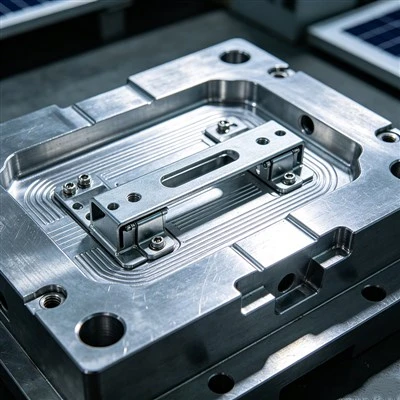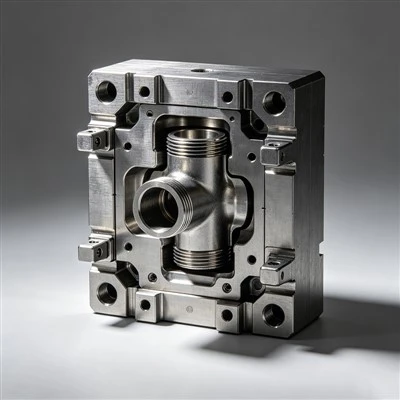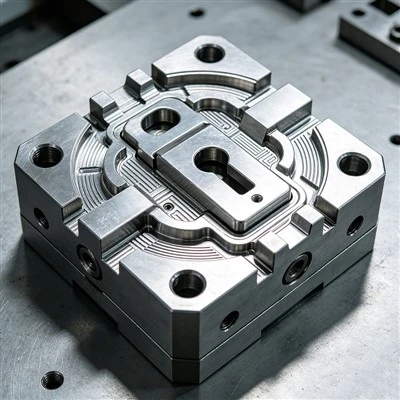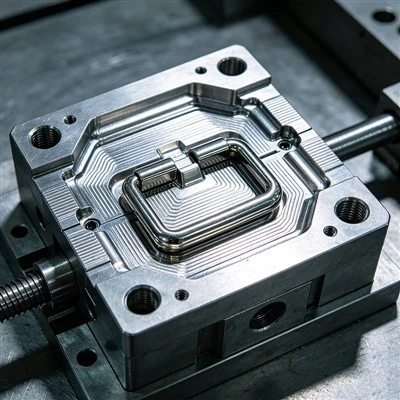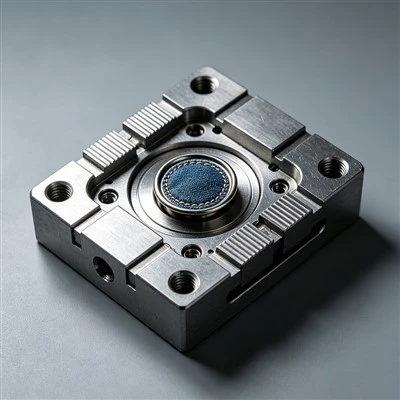


Our Aluminum Alloy Auto Engine Parts Die Casting Mold is designed for manufacturers producing automotive engine and powertrain components through high-pressure aluminum alloy die casting. We develop custom tooling based on 2D drawings, 3D CAD models, component geometry, and production requirements, supporting consistent part quality and repeatable manufacturing in volume production.
Production Specifications
| Parameter | Specification |
|---|---|
| Mold Type | High-Pressure Die Casting Mold |
| Application | Automotive Engine & Powertrain Parts |
| Mold Steel | H13 |
| Mold Hardness | 44–48 HRC |
| Applicable Aluminum Alloys | A383, A384, ADC12 |
| Compatible Die Casting Machines | 280T–2000T |
| Expected Mold Life | Over 200,000 shots with proper maintenance |
Automotive Components We Support
We manufacture customized die casting molds for different automotive aluminum components, with mold structures adapted to individual part designs.
Engine Housings:Mold solutions for aluminum engine housings and structural enclosures requiring dimensional consistency.
Transmission Cases:Customized tooling for AT, CVT, and DCT transmission housing configurations.
Engine Covers:Cavity and parting-line designs adapted to engine covers and other aluminum protective components.
Automotive Structural Components:Tooling for complex aluminum alloy components with integrated mounting points, ribs, and internal features.
Key Performance Features
H13 hot-work tool steel withstands repeated heating and cooling cycles, reducing thermal fatigue and extending mold service life.
Heat-treated H13 steel reaches 44–48 HRC, improving resistance to wear and deformation during repeated casting.
CNC machining, precision grinding, and cavity polishing ensure accurate dimensions and smooth surfaces, reducing flash and dimensional deviations.
Integrated cooling channels regulate mold temperature, helping stabilize casting cycles and reduce thermal imbalance.
Replaceable inserts and modular mold construction simplify component replacement, reducing maintenance time and production downtime.
Expected to exceed 200,000 shots under proper operating and maintenance conditions, reducing tooling replacement frequency.
Material & Machine Compatibility
Supported Aluminum Alloys: A383, A384, ADC12.
Compatible Die Casting Machines: 280T–2000T clamping force range.
Mold Configuration: Customized cavity structure, gating system, and mold dimensions based on component drawings and machine specifications.
Mold Inspection and Trial Production
Mold Assembly Inspection:We check mold assembly, parting surfaces, and the fit of key components before trial production.
Trial Casting Evaluation:Trial runs allow us to assess mold operation, casting formation, and component release under actual production conditions.
Sample Quality Verification:We evaluate trial castings against agreed dimensional and surface requirements to identify potential issues.
Mold Adjustment:Necessary tooling adjustments are made based on trial results before final acceptance and delivery.
Custom and Project Support
Drawing-Based Development:We accept 2D engineering drawings and 3D CAD files to develop tooling around your component specifications.
Engineering Consultation:Our team provides mold design consultation and discusses component geometry, material selection, and machine compatibility before production.
Project-Specific Modifications:We accommodate different cavity configurations, mold structures, and component designs according to individual project requirements.
After-Sales Support:We provide technical support for mold operation, maintenance, and tooling-related issues after delivery.
Supply Information
| Item | Details |
|---|---|
| MOQ | 1 Set |
| Lead Time | 30–45 Days |
| Mold Material | H13 Tool Steel |
| Mold Hardness | 44–48 HRC |
| Applicable Machines | 280T–2000T |
| Customization | Available |
| Drawing Format | 2D Drawings / 3D CAD |
| Sample | Trial Casting Samples Available |
| Packaging | Export-Standard Wooden Case |
| Shipping | Sea Freight / Air Freight |
Frequently Asked Questions
What files are required to start an automotive engine die casting mold project?
We accept STEP, IGES, and other commonly used 3D CAD formats, along with PDF or DWG engineering drawings. Component tolerances, critical dimensions, and machining requirements help us define the tooling specifications.
Can you manufacture a replacement die casting mold for an existing automotive component?
Yes. We can develop replacement tooling based on an existing mold, component samples, or engineering drawings. The mold structure is configured to match the original production requirements and machine interface.
Can the mold be designed for multiple production cavities?
Yes. Single-cavity and multi-cavity configurations can be developed according to component size, machine capacity, required output, and production cycle requirements.
Who owns the custom die casting mold after full payment?
Mold ownership and tooling usage rights can be defined in the purchase agreement, including ownership transfer, storage arrangements, and restrictions on third-party use.
Can you manufacture molds according to automotive OEM drawing requirements?
Yes. We can work with customer-specified dimensional tolerances, GD&T requirements, critical-to-quality dimensions, and engineering revisions to align tooling development with automotive component specifications.
Can you modify the mold if the automotive component design changes?
Yes. We can evaluate engineering revisions and assess their impact on cavity geometry, inserts, cooling channels, and mold structure before implementing the required modifications.
Hot Tags: aluminum alloy auto engine parts die casting mold, China aluminum alloy auto engine parts die casting mold manufacturers, suppliers, factory, Aluminum Alloy Auto Engine Parts Die Casting Mold, aluminum alloy die casting mold, Aluminum Automotive Engine Mold, Aluminum Vehicle Engine Tooling, Auto Engine Aluminum Die Cast Mold, Automotive Aluminum Component Mold